“Authenticity After Abundance” in the AI Era: What Instagram’s CEO Is Warning Us About
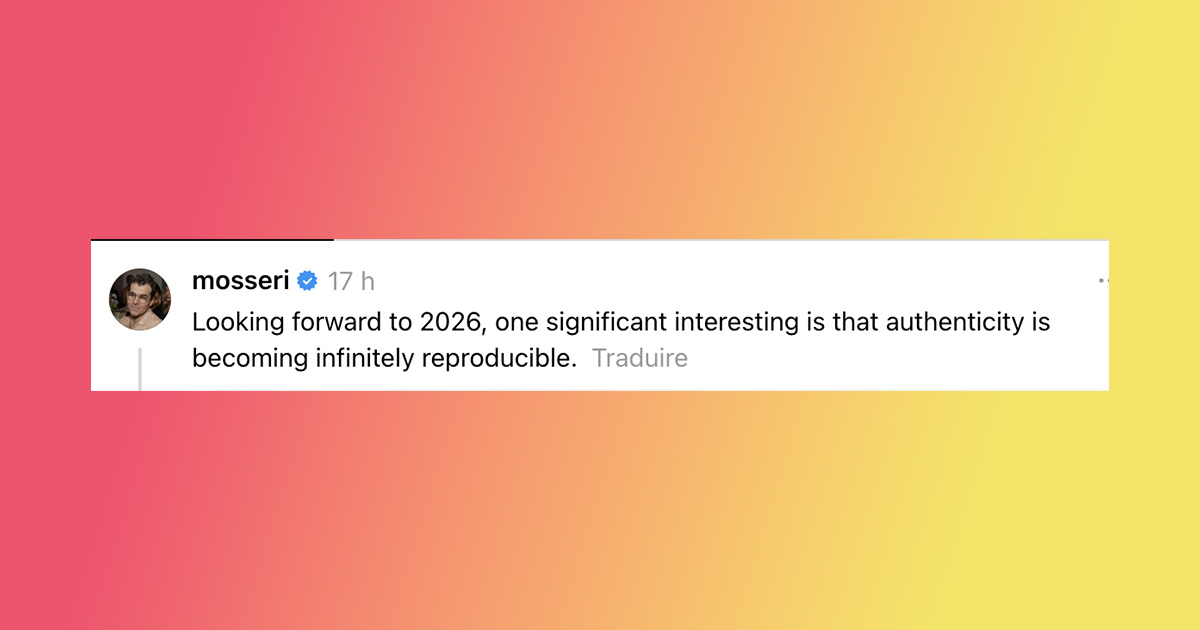
In a long post published on Threads, Adam Mosseri lays out what he sees as one of the biggest risks facing social platforms over the next few years. As the world changes faster and faster, he argues, platforms like Instagram risk falling behind if they fail to adapt. The core shift he identifies is simple but unsettling: authenticity is becoming infinitely reproducible. Tools that generate realistic images, videos, and voices are improving rapidly, and the feeds are already filling up with synthetic content that looks indistinguishable from captured reality. What once made creators valuable, being real, having a voice that could not be faked, connecting directly with people, is no longer exclusive. In this context of infinite abundance and growing doubt, Mosseri reflects on what still makes creators matter, how aesthetics are changing, why imperfection is becoming a signal of trust, and why platforms will need to help users judge not just content, but credibility itself.
I’ve pulled out the seven key takeaways from his post below.
1. Authenticity is no longer scarce by default
Mosseri’s starting point is that what used to be rare is now reproducible at scale. Being real, having a voice, or appearing authentic is no longer exclusive to humans with a camera and an audience. With the right tools, those signals can now be generated on demand. As he puts it, “authenticity is becoming infinitely reproducible,” and “everything that made creators matter… is now suddenly accessible to anyone with the right tools.”
2. AI-generated content will massively outnumber captured content
He is explicit that the balance of content is about to flip. In the near future, most of what people see will no longer come from captured moments, but from generated ones. Even if today’s AI content still feels slightly fabricated, that gap is closing fast. “There will be much more content created by AI than captured by traditional means in a few years time,” he writes, noting that feeds are already “starting to fill up with synthetic everything.”
3. Creators matter more, not less, in an AI-saturated world
For Mosseri, the explosion of synthetic content does not reduce the importance of creators. It reinforces it. As trust in institutions continues to decline, individuals remain the primary source of credibility and connection. In a world overwhelmed by generated media, authentic human presence becomes more valuable, not less. “Authenticity is fast becoming a scarce resource,” he writes, “which will in turn drive more demand for creator content, not less.”
4. The bar shifts from “can you create?” to “can only you create this?”
Mosseri frames this as the new gate for creators. Creation itself is no longer a differentiator, because tools have removed most technical barriers. What matters now is whether the output is inseparable from the person behind it. As he puts it clearly, “the bar is going to shift from ‘can you create?’ to ‘can you make something that only you could create?’”
Creation itself is no longer the gate. The new gate is uniqueness tied to the individual, not the tool or the format.
5. The polished Instagram feed is effectively over
He notes that the way people use Instagram has already changed. Sharing personal moments in the main feed largely stopped years ago, replaced by Stories and private messages where the pressure to perform is lower. What dominates these spaces is not polish but proximity to real life. “People largely stopped sharing personal moments to feed years ago,” he writes, adding that the primary way people now share content is through DMs, with “blurry photos and shaky videos of people’s daily experiences.”
6. Imperfection becomes a signal of reality
As polish becomes cheap and ubiquitous, Mosseri argues that it loses its power to convince. Perfect lighting, flawless skin, and refined production no longer signal effort or truth. Instead, rough edges start to matter. “Flattering imagery is cheap to produce and boring to consume,” he writes, explaining that in a world where everything can be perfected, “imperfection becomes a signal.” Rawness, in this context, functions as proof rather than style. As polish becomes cheap and ubiquitous, raw and unflattering content functions as proof. Imperfection is no longer aesthetic. It is defensive.
7. Platforms must help users judge credibility, not just content
Mosseri is clear that labeling AI-generated media will not be enough as tools improve. As synthetic content becomes harder to detect, the focus must shift from the media itself to the context around it. He argues that platforms need to surface more information about who is posting and why, because “labeling content as authentic or AI-generated is only part of the solution.” In a world of growing skepticism, helping users assess credibility becomes as important as distributing content.
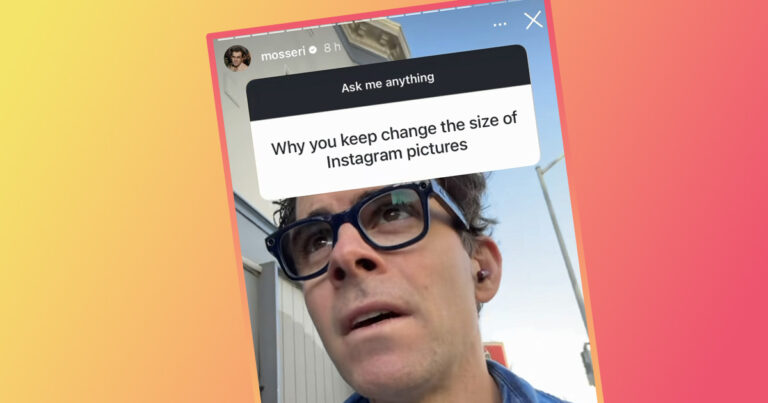
You can find the full post on Threads and the excerpt on his Instagram :