Learn from the best!
Every week, I curate the viral videos overperforming across 40+ European radio stations. Join for free!

Every week, I curate the viral videos overperforming across 40+ European radio stations. Join for free!
Your station’s social media presence shapes how people see, find, and remember you.
But if you want it to truly serve your on-air brand, stop treating it like a reflex.
Think of it instead as an editorial extension — a space that amplifies what makes your station unique.
Here are 15 simple, practical ways to turn your social channels into a real growth engine for your audience and your brand.
A studio without cameras is a missed opportunity.
But it’s not just about filming — what happens after matters just as much.
You don’t need to make movies; you need to be able to clip, export, and share your best on-air moments easily.
The smoother the workflow, the faster you can post — and the cheaper each piece of content becomes.
👉 Your studio footage is gold. Treat it as an asset, not a burden. Every minute lost is a missed opportunity.
Volume can work — if your videos perform. If you’re posting constantly and only getting 100 views per clip, the problem isn’t the algorithm. It’s the content.
👉 Measure what you publish, test new angles, and keep refining your formats.
Some videos will flop — that’s normal. What matters is that your median view count keeps rising month after month.
Don’t try to imitate TV or digital media on a smaller budget.
Radio is cool again.
The biggest streamers are designing studios that look like radio booths — and audiences love that raw, real vibe.
Forget overdesigned motion graphics or forced green screens.
👉 A clean, well-lit studio shot will always beat a cheap TV imitation.
Toutes les plateformes, Meta, Every major platform — Meta, TikTok, YouTube — is built around short video now., YouTube… favorisent les vidéos courtes. It’s the fastest way to reach new people and the easiest to scale.
👉 Think short-form first: punchy pacing, strong openings, and something that hooks the viewer in the first few seconds.
You never know where a video will take off.
A clip that goes nowhere on TikTok might blow up on Facebook — there’s no logic to it.
If your team is small, focus on creating great content first.
Then adapt the same piece to each platform’s format and rhythm.
👉 Publish widely, study what performs, and refine as you go.
Social platforms evolve fast. What works today might flop tomorrow.
👉 Experiment with length, tone, intros, visuals.
Every post should teach you something about your audience and what resonates.
Your goal isn’t to reinvent the radio on social — it’s to keep the same editorial heartbeat across platforms.
👉 Every post should extend, contextualize, or highlight what’s happening on air.
And your feed should look and sound like your station.
Otherwise, you’ll never build a real bridge between your listeners and your online audience.
Every major platform — YouTube, Spotify et Netflix — is investing in long-form video.
For radio, that’s a real opportunity to create premium content that builds on your live shows:
un-edited interviews, exclusive behind-the-scenes reactions, post-show debriefs…
👉 Think storytelling, not just replay. Long-form lets your listeners stay connected beyond the airwaves.
Organic reach alone won’t cut it anymore. On Facebook, it dropped by more than 50% in 2024
— even if things are looking a bit better in 2025.
Video views help your brand awareness, but only paid campaigns will drive qualified traffic to your app, player, or website.
👉 Always budget some media spend — even a small one — if you want direct conversion from social to stream.
A common trap: spending too much time on Stories.
Yes, they build loyalty — but they don’t recruit.
Stories reach your current fans, while Reels reach new listeners.
👉 Keep them under 15% of your content production.
The rest should go into Reels, Shorts, and feed posts.
Ideally, one dedicated person should rethink your on-air moments daily to make them surprising and fresh.
Too many social managers ignore moderation and comments — but listeners expect answers, not just announcements.
👉 Host Q&As with your presenters, reply to comments, highlight user-generated content.
Yes, it takes time and the right mindset — but one good reply can spark a viral thread and boost engagement far more than a Story ever could.
“Official” communication comes from traditional media logic — nice visuals, clean logos, strong branding.
That builds structure and authority, but rarely performs well online.
“Organic” communication is what comes from your hosts — memes, trends, candid moments.
It’s messier, funnier, more human, and often much more viral.
👉 The best strategy mixes both.
You need polish and personality to stand out.
That’s where everything happens.
99.9% of a video’s success depends on how it starts.
Skip the intros, jingles, logos, or static screens — they just waste time.
👉 Open strong: a clear line, an emotion, a question, a punch.
If you miss the start, you disappear from the feed.
You’re a media brand — your feed should reflect that diversity.
Alternate between on-air clips, behind-the-scenes moments, guest formats, artist news, and audience content.
👉 Repetition kills attention. Keep your feed varied and alive.
You might wish people spent less time on social and more time listening to the radio —
but habits don’t change. You have to adapt to survive.
Today, 75% of French people use social media.
Even ChatGPT’s audience in France tripled in a year.
As Bruno Patino said on France Culture, the press had to stop fighting the digital shift and find new models through the platforms.
For radio, that reflection has to happen now — how can we generate value on the platforms, not against them?
Good news: the solutions already exist.
A French pop-rock station that nails the live experience.
Their morning show is filmed and co-broadcast on TV.
They balance on-air highlights, behind-the-scenes clips, artist news, and partner events — all in crisp quality (thank you, iPhones).
Smart editorial line, great visual identity, fast reactions — they’ve found the sweet spot between radio and digital.
@rtl2officiel SURPRISE ! 🎉 Toute l’équipe RTL2 a préparé une baby shower pleine d’amour pour Justine 😍 Une déco de rêve et une émission du Double Expresso pas comme les autres, pour célébrer une personne qu’on adore ❤️
♬ son original – RTL2 – RTL2
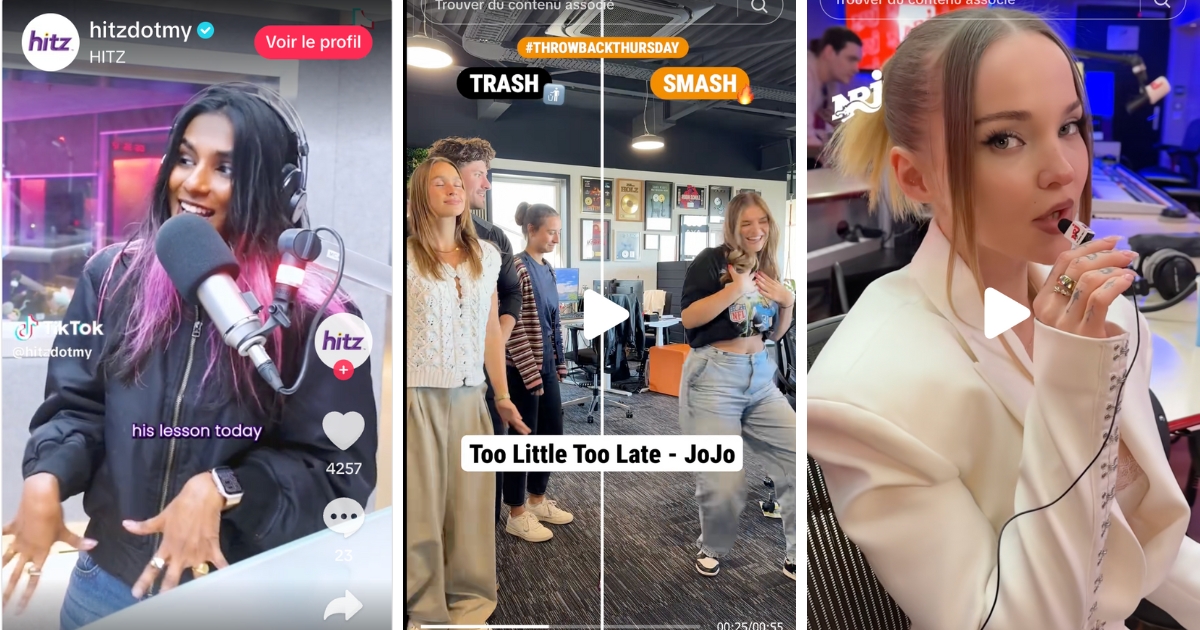
Malaysia’s top English-language music station.
Their morning team — Anne, Ili, and Prem — keep things simple but powerful.
The studio isn’t fancy, but the image quality and editing energy make every video pop.
Result: an authentic, engaging feed that feels real.
@hitzdotmy It’s giving click or clique ✨ #hitzmorningcrew #hitz
♬ original sound – HITZ – HITZ
One of Germany’s biggest private radio networks.
They’ve turned their office life into content — trends, challenges, staff reactions — giving a human face to the brand.
@bigfm_official Wenigstens bei den letzten Songs sind sich alle einig!🫶😂 #dancechallenge #throwback #bigfm
♬ Originalton – bigFM
France’s #1 music radio.
Their morning and evening shows produce tons of strong on-air content.
They add fun, simple videos with artists — shot in-studio or during events — creating real, spontaneous chemistry.
@nrj If you say I’m too much baby go find leeeesss (mais en mode ASMR) 🤫 @Dove Cameron #dovecameron #toomuch #nrj #asmr
♬ original sound – NRJ
A U.S. radio show broadcast across multiple stations.
One of the first to film their shows — even airing on TV since 2014.
They’ve kept that “organized chaos” radio feel, mixing formats:
3-minute TikToks, 12-minute YouTube videos, and massive cross-platform engagement.
@breakfastclubam 🎊 Bad Bunny will be tearing up the stage at Super Bowl LX in 2026 🕺🏾💃🏽! @lorenlorosa_iconic has the latest!
♬ original sound – The Breakfast Club – The Breakfast Club
In summary
Social media can’t replace your radio — but it can amplify it.
The key is balance: structure and spontaneity, quality and authenticity, visibility and connection.
When used strategically, your social presence doesn’t just grow your numbers — it builds real attachment between your station, your hosts, and your audience.
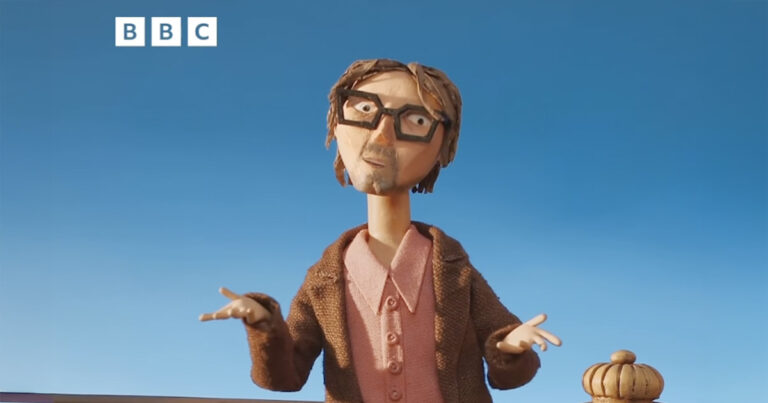
Jarvis Cocker, frontman of Pulp, is about to lull listeners to sleep with a special episode of The Sleeping Forecast, a wordplay on the BBC’s iconic Shipping Forecast. The programme will air on BBC Radio 6 Music on 26 October and is already available on BBC Sounds. A poetic twist on the legendary marine weather…
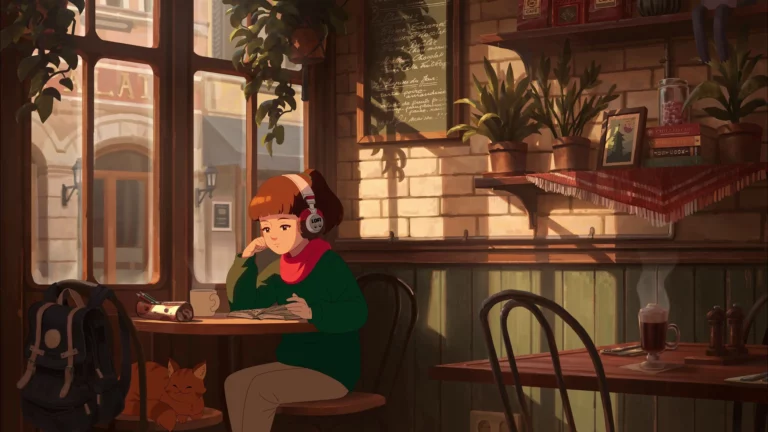
The Lofi Girl brand is opening its first physical location in Paris. The Lofi Café is due to open in early 2026 at 60 rue Saint-Denis, in the 1st arrondissement. The official promise is simple: a cozy place to work, relax and listen to Lofi music. No public details at this stage about prices or…
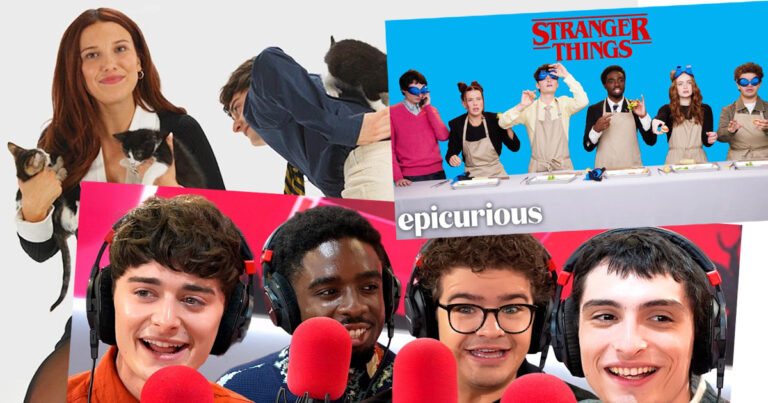
Season 5 of Stranger Things is back after a very long break of over 3 years. Netflix knows this. We’ve all got older (like the cast), our habits have changed, our uses have changed and some of the plot has been forgotten. So the platform orchestrated one of the biggest promotional tours ever for a…
TikTok and iHeartMedia have just announced a major multi-platform partnership. Together, the two companies will launch a complete ecosystem combining filmed podcasts, radio, video studios and live events. The agreement marks a strategic turning point: TikTok creators will become voices and storytellers at events, on radio and in podcasts. The “TikTok Podcast Network”: 25 new…
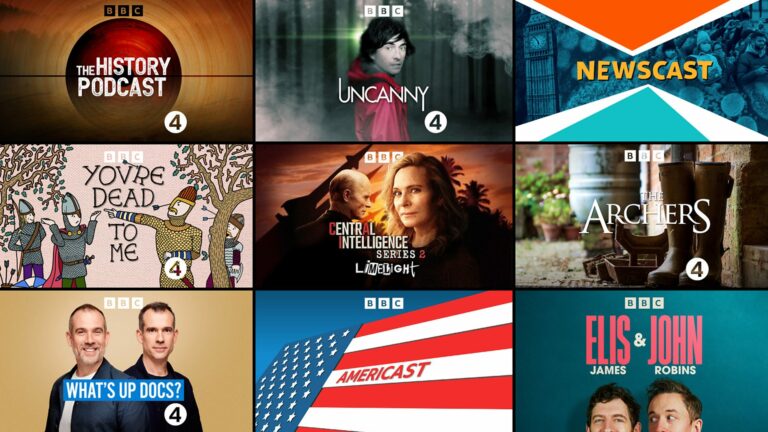
The BBC has announced another record year for its BBC Sounds platform. Between January and November 2025, the audio platform exceeded 2.5 billion listens, an increase of +8% compared to the same period in 2024. A total of 2.8 billion audio plays were recorded across the BBC ecosystem, including radio, podcasts, sport, news and rich…
Canadian group Stingray has just completed its biggest acquisition to date: the purchase of TuneIn, the U.S. radio and audio-streaming giant, for US$175 million. It’s a major turning point for the Montreal-based company, which now aims to establish itself as a global force in the audio ecosystem, particularly in the connected-car space. Who is Stingray?…