Learn from the best!
Every week, I curate the viral videos overperforming across 40+ European radio stations. Join for free!
Every week, I curate the viral videos overperforming across 40+ European radio stations. Join for free!
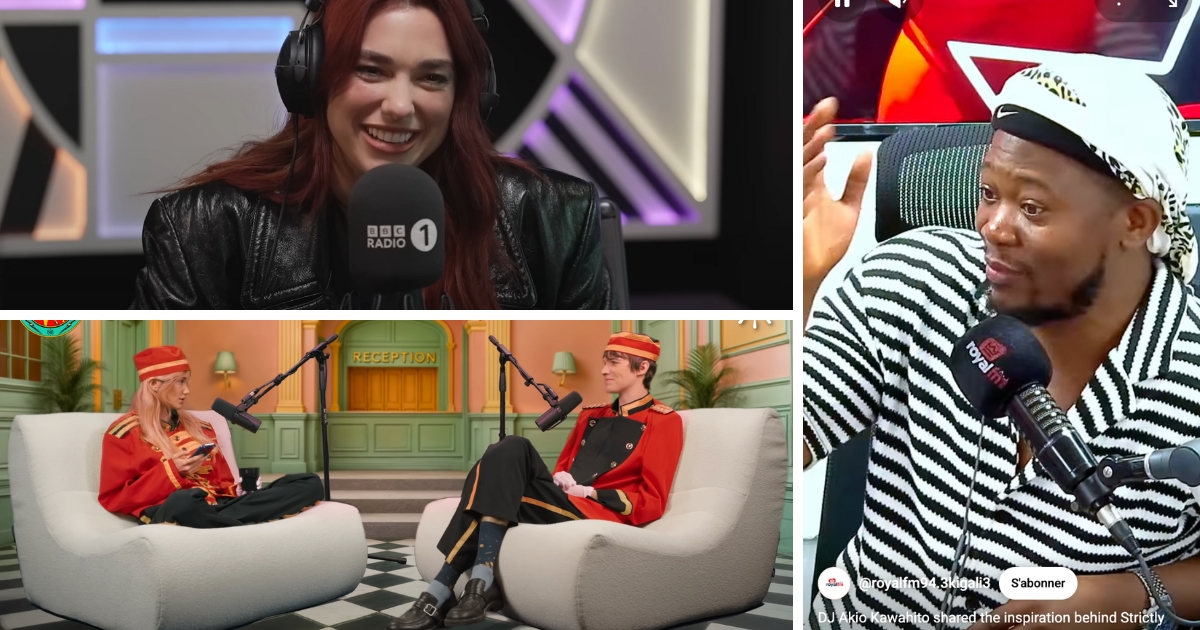
Radio is no longer just an audio experience.
Studios are evolving into full-fledged production sets — without losing what defines them: the essence of radio.
“Video radio” is that hybrid format where visuals matter as much as sound. But how do you design a studio that performs on both fronts — on-air and online — across YouTube, Instagram, and TikTok?
We analyzed over 50 studios worldwide to identify the six core principles that make a filmed-radio setup successful in today’s social media era.
Before diving into our list of the most inspiring studios, here are the key strategies they all share to capture — and hold — attention online.
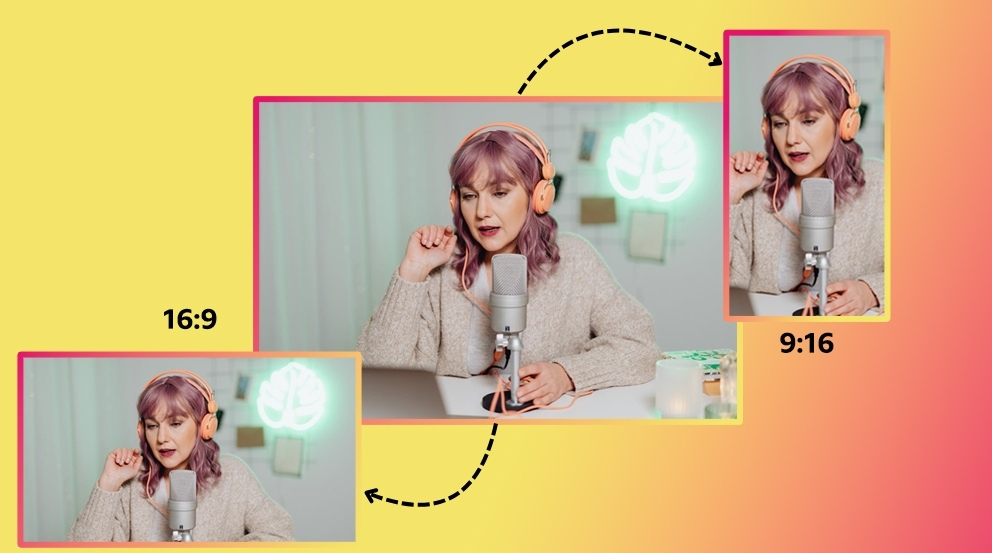
Video consumption now lives on two screens:
A modern studio must be built for both.
That means planning wide shots for overall context and tighter, centered shots on hosts and guests — easy to crop vertically without losing key moments.
Even in video, the audience should feel they’re still in a radio studio.
Keep the visual cues that make radio iconic — visible mics (like at the BBC), headphones, and the free, authentic energy of live broadcasting.
👉 The visuals shouldn’t replace radio — they should enhance it.
That mix of sound and sight gives a sense of authenticity and “behind the scenes” energy audiences love.
In the age of sharing, a video clip can appear anywhere — often cut off from its original context.
The only way to stay recognizable is through constant branding.
👉 Integrate your visual identity everywhere:
on background screens, mic flags, mugs, even in the overall studio design.
Remember, most views will happen in 9:16 — so side logos might get cropped out. Plan accordingly.
Radio is a conversation, not a monologue.
Interactivity has to be visible and central — just like streamers do on Twitch.
To boost creativity and variety, design a studio that can morph.
Combine distinct zones:
That modular approach lets you create interviews, debates, and short formats in the same space — without breaking the radio vibe.
Social success depends on speed and volume.
Your post-production workflow is as critical as the studio itself.
Technical processes should be lightning-fast — from clipping highlights to exporting in the right formats.
The goal: flood platforms with relevant clips while the topic’s still hot.
The faster you post, the stronger your visibility and viral potential.
Need help designing or optimizing your studio? We can help.
Here are nine standout examples of radio and podcast studios that perfectly apply — and sometimes reinvent — the six principles above.
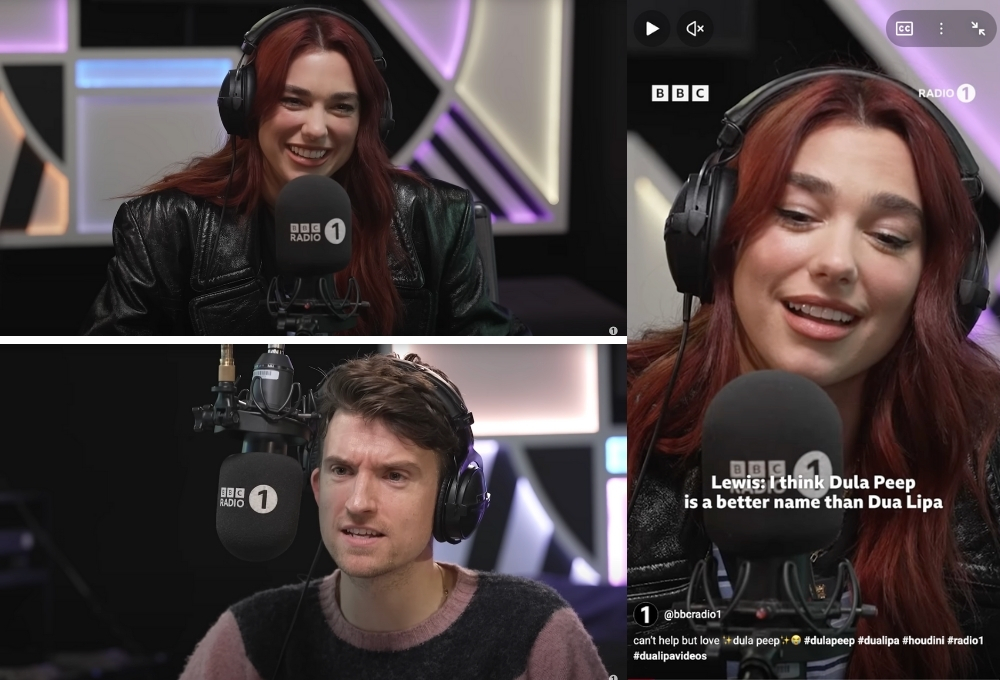
BBC Radio 1 proves that less really is more.
With a strong brand, clean design, and its iconic microphones, the visual identity speaks for itself.
That stripped-back aesthetic gives every guest space to be real — it feels raw, direct, and unmistakably BBC.
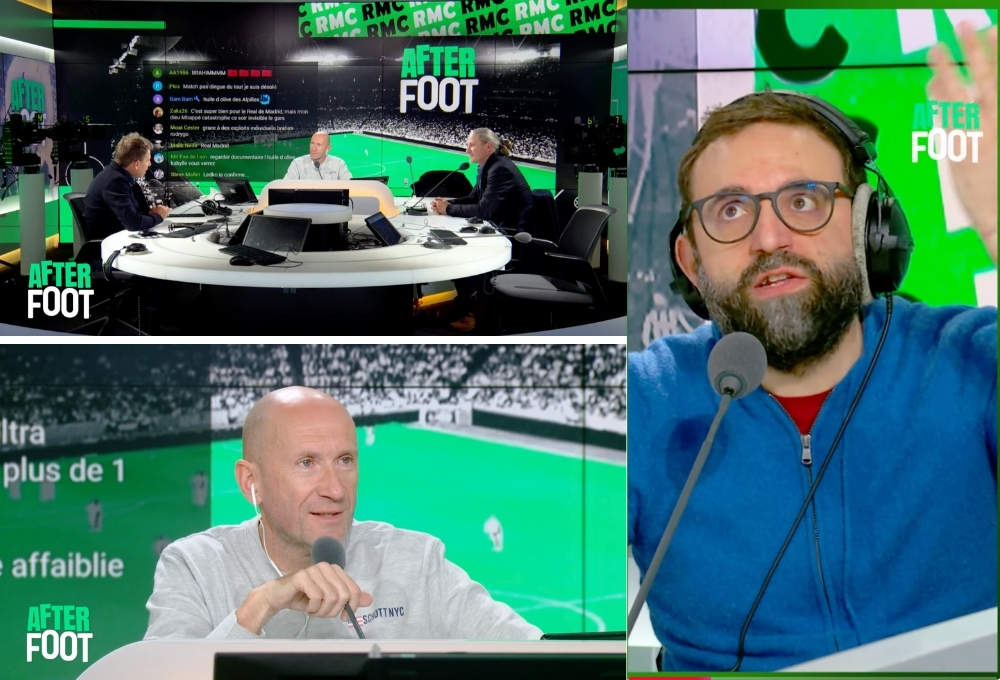
RMC integrates live audience comments directly on-screen, turning listeners into active participants — a move straight out of the Twitch playbook. For L’After Foot, where passionate fans call in constantly, it feels perfectly natural to see their voices displayed in real time.
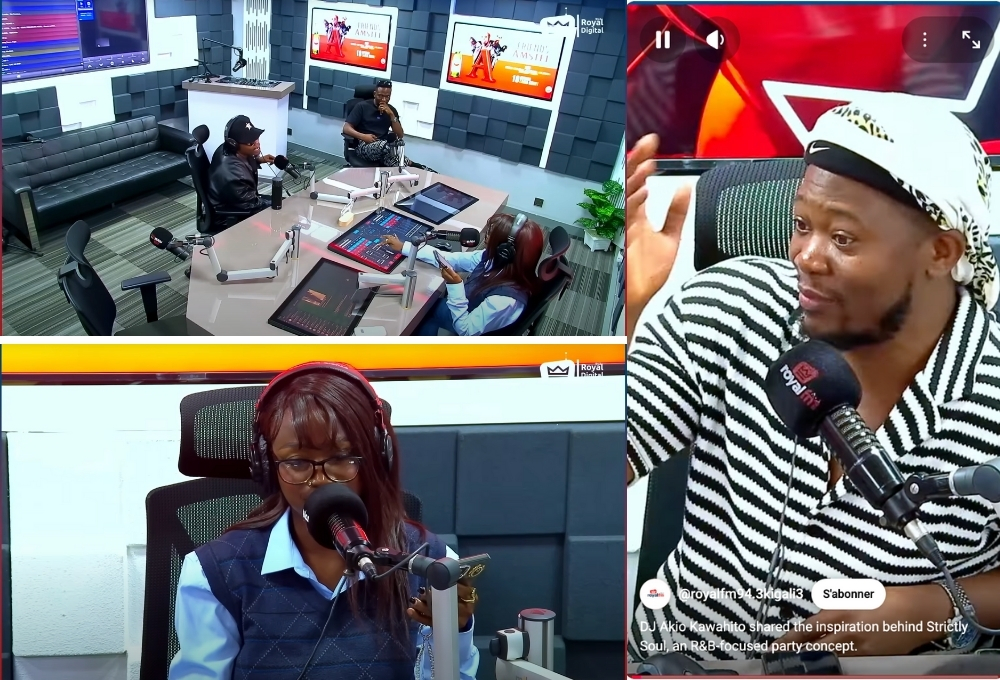
Royal FM’s setup blends several creative zones: a main desk, a casual couch area, and even a DJ booth in the back.
It creates an easy, friendly vibe — and sometimes even spontaneous dance breaks.
Smart camera placement hides the screens during frontal shots, keeping the hosts fully visible in frame..
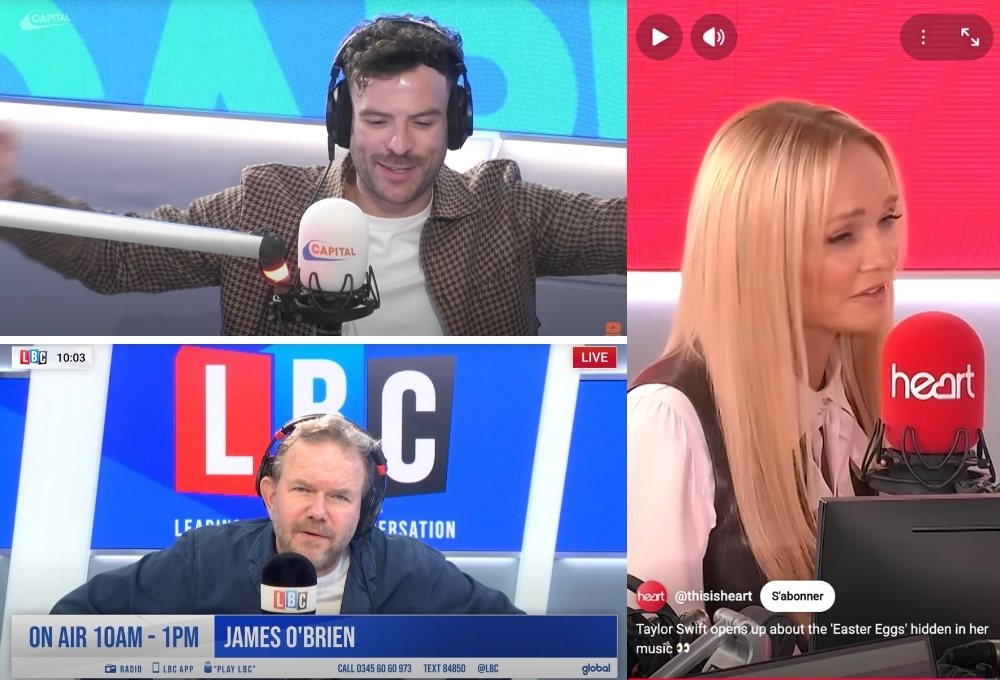
From Heart’s bold red to Capital’s electric blue, Global’s studios are a masterclass in immersive branding.
Every inch reflects a strong visual identity — sleek, modern, and instantly recognizable.
Each guest steps in looking (and feeling) like a superstar.
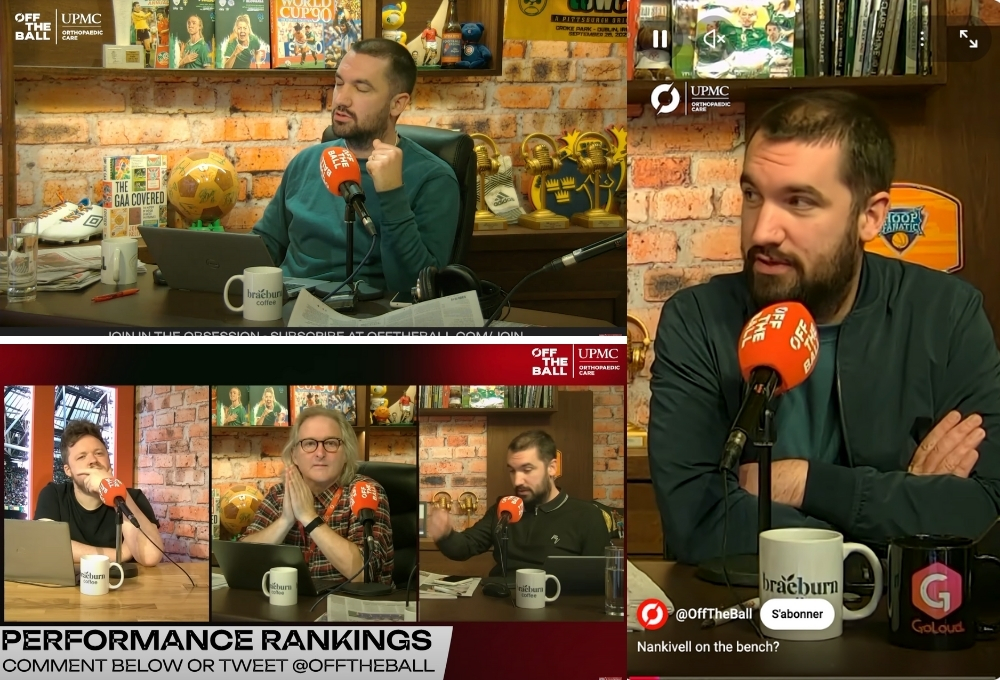
Off The Ball sits halfway between a traditional radio show and a podcast — broadcast on FM but consumed mostly on demand.
It works perfectly in both 16:9 and 9:16 formats, adapting easily from YouTube to TikTok.
The setup — brick wall, sports memorabilia, classic radio mics — creates a warm, authentic vibe that makes people talk like old friends.
It’s that mix of casual energy and pro sound design that keeps viewers tuned in.
(Only thing missing? Maybe a couple of beers.)
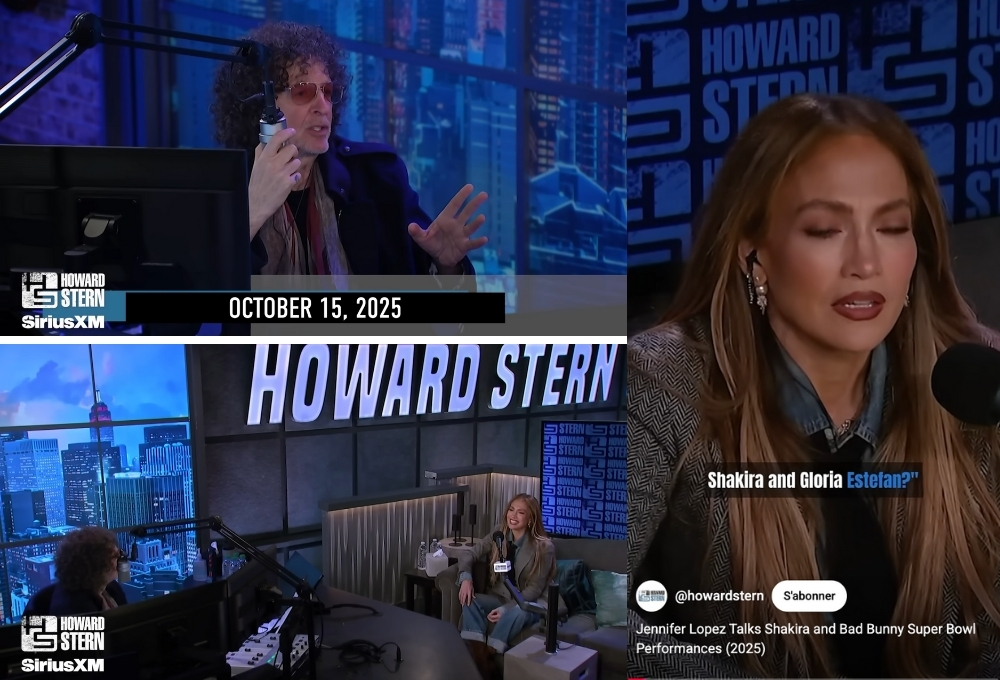
Howard Stern is a character — the “King of All Media.” His studio is too.
It creates a dark, nocturnal atmosphere that invites honesty and intimacy. The reversed microphone, a long-time trademark, adds to the sense of personality and legend.
Guests sit comfortably on the couch in front of him, facing the host and his crew, in a space that feels like late-night radio at its best.
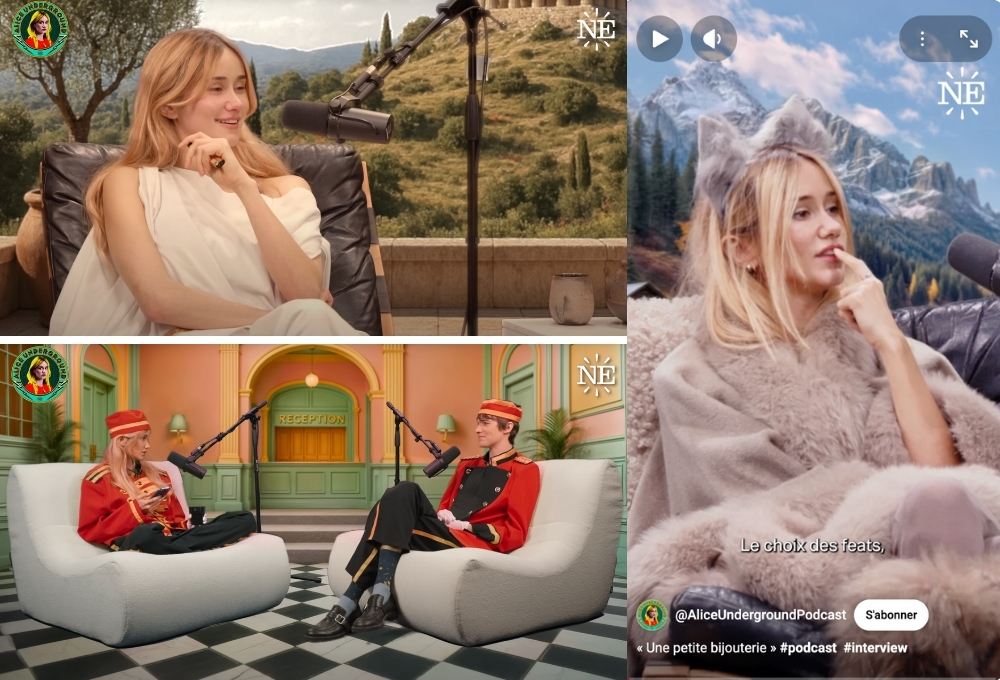
A simple but very effective idea. Host and photographer Alice Moitié welcomes her guests into a visual atmosphere tailored to each episode.
A green screen and sometimes absurd costumes create a surreal mood that makes the viewer want to watch — and the guests relax.
The setting breaks the usual distance of interviews and adds humour and spontaneity.
The unchanged mic stands remind us it’s still a podcast — real and grounded.
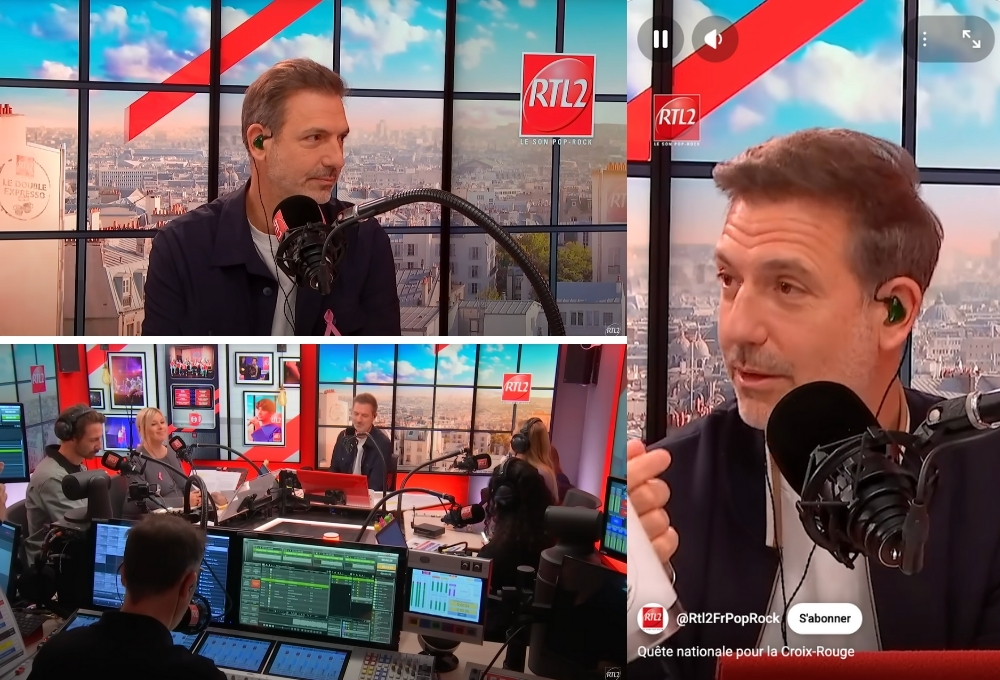
RTL2’s morning show is a radio programme filmed for TV, broadcast on TV.
The studio has been decorated with care, but its essence remains radio: visible microphones, bright light, and spontaneous energy.
The setup allows the team to clip the show easily and flood social platforms with videos — an ideal balance between radio authenticity and TV-level quality.
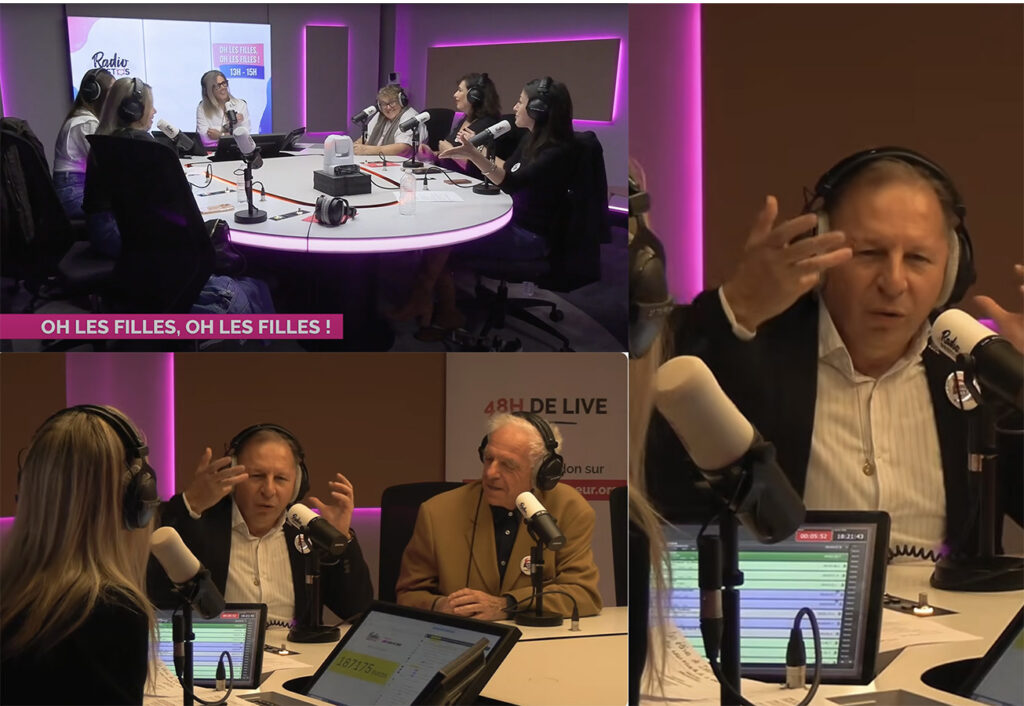
Radio Restos is a pop-up radio station that raises funds for Les Restos du Cœur each year.
It broadcasts from the ISCPA radio school’s studio — a simple space that can host six to eight people.
The camera angles are particularly well thought-out: positioned at eye level, they give a natural sense of proximity.
One striking shot shows host Émilie Mazoyer from behind, framed against guest Olivier Cachin, creating real visual depth and intimacy.
Want to go further?
Ask for our complete benchmark of 25+ radio and podcast studios from around the world — with visuals, layout ideas and design insights to help you rethink your own space.
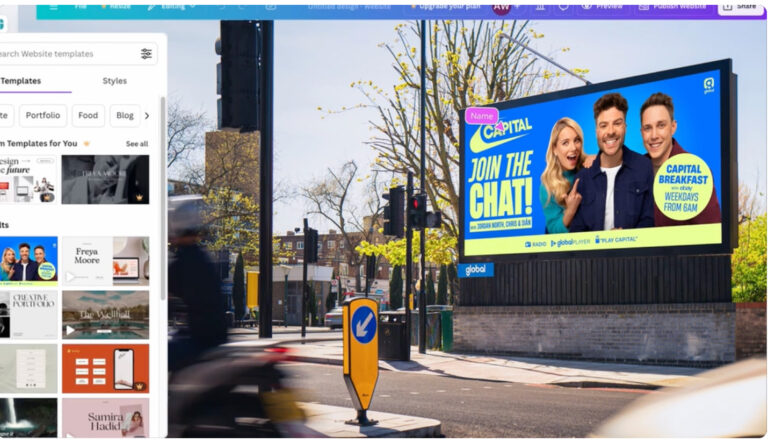
In a world where brands are fighting for attention, some European radio stations have understood how to transform their programmes or events into engaging and viral digital content. Here is a selection of concrete cases where the on-air channel becomes a starting point for social network activations, with or without their presenters. 1. Heart, British…
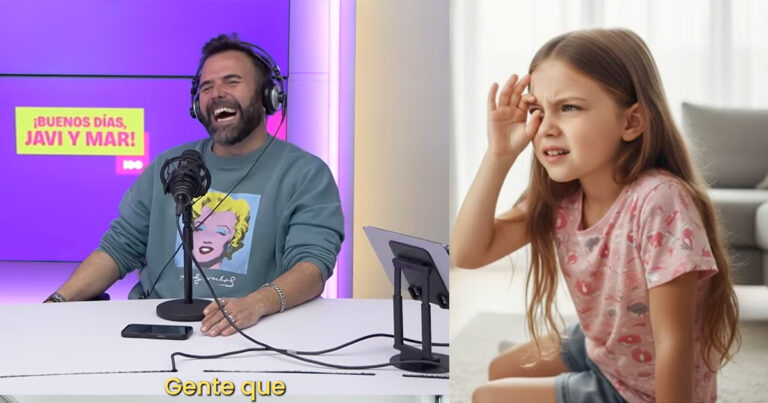
Spanish radio station Cadena 100 has hit the jackpot! In the Social Radio newsletter, which each week analyses the best-performing content on more than 40 European radio stations, Spanish radio station Cadena 100 is appearing more and more with a fairly classic radio format where they ask children questions and listen to the answers. From…
The Global Group has just launched a wonderful project: WSQK The Squawk, a short-lived radio station inspired by Stranger Things, is now available on London DAB, Global Player and connected speakers. The station will remain online until 1 January, in line with the release of the three parts of the final season of the show….
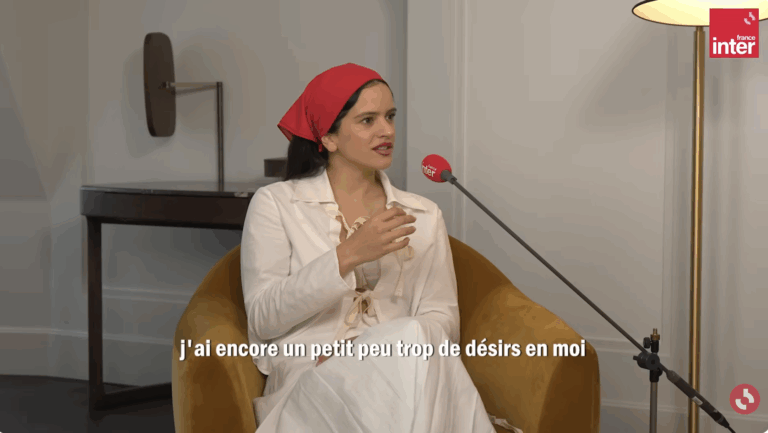
The release of LUX, Rosalía’s new album, has sparked a wave of high-performing content across major media brands. Three outlets stand out in particular LOS40, France Inter, BBC and NRJ each with a different strategy, but all with strong impact. LOS40 : the Spanish powerhouse LOS40 clearly dominates Rosalía-related coverage thanks to an event-driven and…
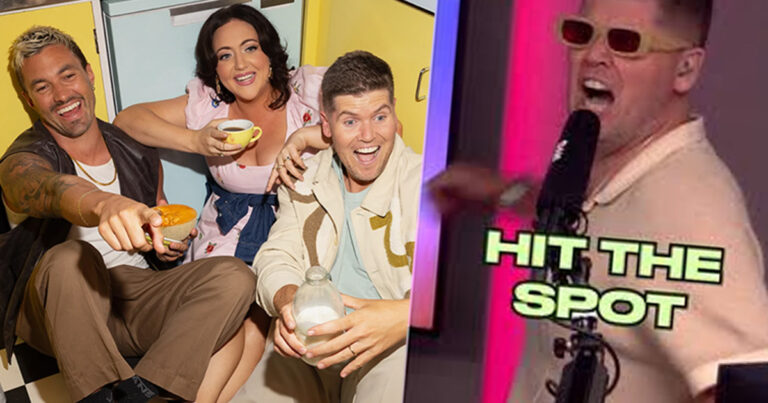
I guarantee: once you’ve watched one sequence of this game, you’ll want to watch them all! Hit The Spot is a radio game played by the team from The Edge morning show. The principle is simple: Dan has to sing a song with the sound off, and then fall back to the right moment when…
TikTok and iHeartMedia have just announced a major multi-platform partnership. Together, the two companies will launch a complete ecosystem combining filmed podcasts, radio, video studios and live events. The agreement marks a strategic turning point: TikTok creators will become voices and storytellers at events, on radio and in podcasts. The “TikTok Podcast Network”: 25 new…