How do french radios make millions views from their interviews?
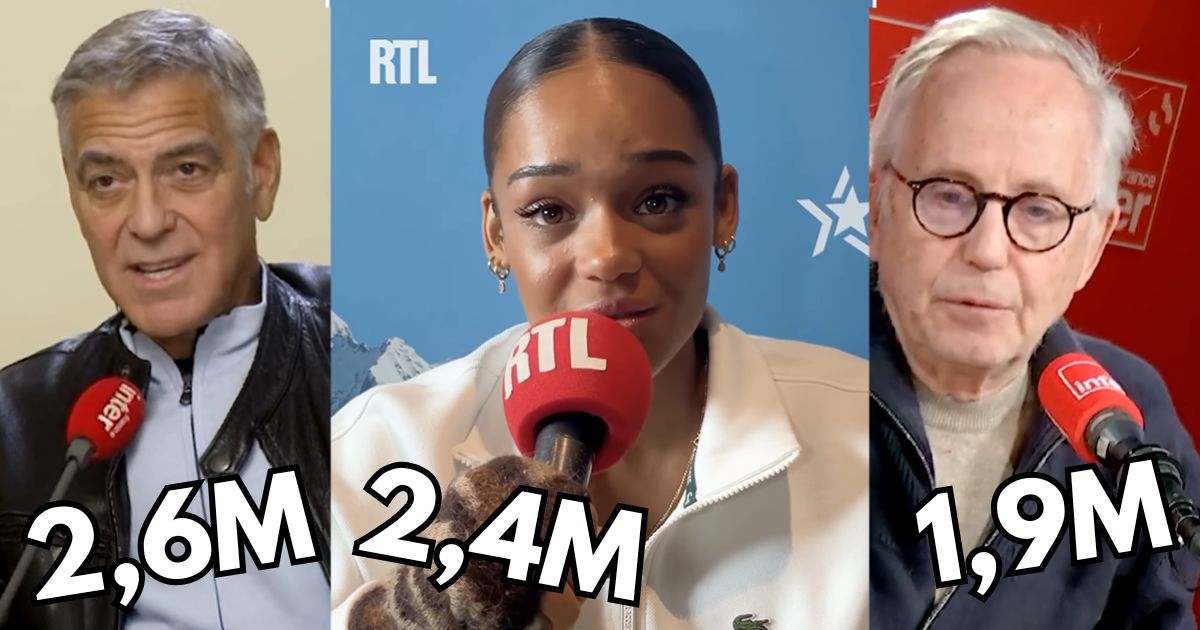
In the latest Social Radio newsletter , which analyses the best-performing content from 32 European radio stations, RTL and France Inter broke records for the most views with content that’s very simple to create: clipping their interviews. I explain why you absolutely must do this to maximise the visibility of your station and show off its quality.
What is cliping?
The term comes from streaming and Twitch. Clips are the rapid extraction of a highlight from a live stream. We cut out 15 to 60 seconds that can live on their own. We start from what already exists by identifying a clear, emotional, surprising or funny passage. We export it, crop it vertically, add a readable title and publish it. That’s clipping.
Why is clipping essential?
You already have the material: Your station generates hours of content every day. It’s free and abundant. Not recycling it and creating only new content is a waste of time.
It’s consistent with your identity: social networks should reflect what’s happening on air. Not be a parallel programme.
It’s efficient: a clip can be produced in 10 to 20 minutes. No need to mobilise a whole team of writers, designers and editors. One person can cut, edit and post.
Should you only post clip content on your networks?
No. The percentage of clips and original content depends on the amount of content your station can produce. If you’re a music radio station, you can’t do just clip content because you don’t have much talk and you also have to talk about your artists and partner events. If you’re a general-interest radio station, doing nothing but on-air will be monotonous. You also need to be able to get out of your studios to vary things a bit and show that you’re close to your listeners, outdoors. In both cases, it’s also important to tell the story of your radio station by sharing behind-the-scenes and off-air moments.
How do RTL and France Inter use it?
They follow a fairly simple logic:
- A video = a clear subject / angle that everyone can understand in less than 3s. So an interview can easily make 3-5 different clips.
- The editing is short, letting the moment breathe by not adding unnecessary effects or pointless illustrative images.
- Minimal contextualisation. You understand who’s talking, what they’re talking about and why it’s interesting from the very first second.
This gives around fifteen extracts a day for RTL and around ten for France Inter. These interviews, which would have reached thousands of listeners live and on podcast, reach several million people on video. These people may become future listeners if they enjoy the content.
My little tip is to multi-clip a sequence with a guest to boost all the related content. Betting on one video per sequence to get a million views is risky, but with three extracts, you have 3 chances of getting there. And the one that does will automatically pull the others up.
Subtitling or not?
This is a question that comes up a lot. There is no single answer; it will depend on your audience, your workflows and the quality of the automatic subtitles. From a purely practical point of view, subtitles extend user retention, capture attention and enable comprehension without sound. But you need to calculate: how much time does it take to subtitle and what % more views will I get out of it? To do this, test over a week with and without subtitles and compare the median number of views. Look at the automatic subtitling solutions (which are getting better every month) and the automatic subtitling platforms too. Take stock of your own media. RTL doesn’t subtitle almost anything any more, France Inter continues on some.
What’s the point of my antenna and my podcasts?
On-air clipping can be compared to non-stop digital signage campaigns. Each video is an example of what your radio station is like on air and can make people want to go and listen to the podcast or get into the routine of listening to your radio station. Like a billboard campaign that introduces your radio station, how many listeners will start tuning in after seeing it? Very difficult to measure.
There’s also the question of broadcasting a podcast in audio or video format entirely on YouTube. Aren’t I going against the grain here too by offering everything to GAFAM? Yes and no. It’s always better to own your content and where it’s viewed. But you don’t have the power of Google, Apple or Meta to impose your platforms. YouTube is a standard feature on all connected televisions and smartphones. It’s a broadcast channel that is increasingly playing on a par with television. So you might as well use this channel to broadcast your content. And then there’s measurement: does YouTube advertising bring in more or less than your audio preroll? What audience are you reaching on YouTube?
Looking at the Mediamétrie and YouTube statistics, one of the only podcasts to show an increase in November was RTL’s ‘Entrez dans l’histoire’ (+12% in November vs. September), and yet all the programmes are available in full on YouTube, with high scores of between 4,000 and 150,000 views. Each application has its own use: on the move you’ll listen to audio, at home to video. There’s something for everyone.